- Emiel Janson@emieljanson
Hey @johnternus I think it’s time for Apple to have quality wednesdays. t.co/C0KuEErGhu t.co/O1qVzcOHWf
Apple please I am also begging you https://t.co/45XEUPHbjD https://t.co/gc0pueKFRB
Company & TeamSuggests Apple adopt Linear-style quality Wednesdays to fix software polish.What people said backReplies split into fellow sufferers ("search that can't find is just.. yeah") and skeptics insisting their own machines are fine, plus a running joke that the index is simply still building after a decade. - mufeez@moofeez
really not liking the trend of code review becoming agent ping pong…
Agents & AIDislikes code review turning into back and forth ping pong between agents.What people said backReplies asked what the alternative even is, argued agent-to-agent review belongs locally before the PR, and one popular quote-post predicted PRs won't exist next year. Another said reviewers shouldn't have to read code the author never wrote. - Paul Macgregor@pdotcv
Print ad for @linear in the latest edition of Arena mag with @embeeargh.
 Company & TeamDesign & CraftShares a Linear print ad running in the latest issue of Arena magazine.What people said backNear-universal adoration from designers, with Volkswagen-era comparisons and a long, happy tangent about justified text and a hand-tuned Super Metroid guide. One quote-poster called it an ad fail for never saying what the product does.
- Nikolay Petkov@nikolay_dp
honestly this is my favourite way to work through github/linear issues and prs though i think there is still room for improvement, and probably some hidden workflows i haven't found yet
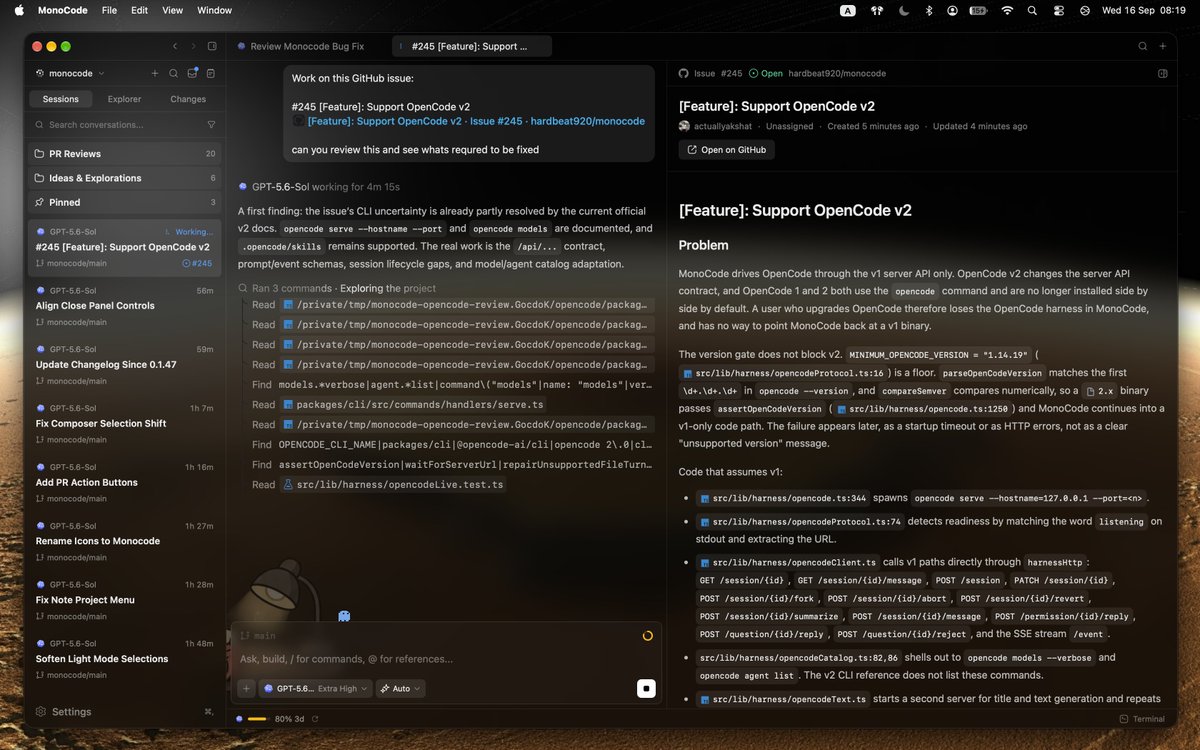 Agents & AIHow People Use ItCalls this his favorite way to work through Linear issues and PRs, with room to improve.
- Merge@merge_api
Last week, we partnered with @Linear for our Lenny and Friends Afterparty! Huge thanks to everyone who came out, hope you all left well connected!
 Company & TeamThanks Linear for co-hosting their Lenny and Friends afterparty and connecting attendees.What people said backAttendees called it one of the year's best events, tagged the taco chef as the real hero, and immediately started lobbying for a New York sequel.
- Adam Hutchinson@adjohu
Human code review is a bottleneck
Agents & AIArgues human code review is now the bottleneck in software development.What people said backNobody pushed back. Replies escalated the take instead, offering "human is the bottleneck" and joking that vibe review is the answer, plus a riff on LGTM becoming feels-good-to-me. - Praveen Venkatesh@praveenvnktsh
Open sourcing my personal autonomous build agent - t.co/ty6ZHmPX6C Move a card to todo on linear, and it automatically plans, builds, ships, redeploys. All while taking notes and interacting with you on linear. This has been powering many of my personal projects recently
Agents & AIHow People Use ItBuilt an open source agent that ships projects when a Linear card moves to todo. - Jesse Chen@jessemchen
A frontier AI lab gave us unlimited token usage for two months. Our engineers already used AI throughout the day, often juggling anywhere from 3 to 20 agents at once. We used the unlimited budget to push beyond everyday coding and test where else agents could accelerate the company. Where possible, we gave them straightforward tasks with clear right and wrong answers. We also tested what happened when the work required more judgment. Here’s what we tried, and how much value each experiment delivered: 5/10 - More PR review agents We had multiple agents examine every PR from different angles. Useful, but our existing Codex review caught most of the same issues. 7/10 - Codebase sweeps We added a `/sweep` command to search the entire codebase for bugs and performance improvements. It worked very well, especially when we pointed it at specific packages and gave it some direction. 8/10 - API documentation audit Agents read our entire API documentation and codebase, identified mismatches between the docs and implementation, and cleaned up typos and spelling errors along the way. 2/10 - Linear triage Agents reviewed every untriaged ticket and assessed whether it was actionable. I was really hoping this would create a self-improving loop, but either the Linear tickets were too vague or the correct action was too ambiguous. 3/10 - Trace optimization Agents combed through our traces for slow queries, but struggled to close the loop consistently. 10/10 - Refactors Agents finished all of our outstanding refactors that were mechanical or borderline mechanical. My trust in AI for this kind of work is nearly 100%. It is definitely more reliable than a human. 10/10 - Computer use for QA After every significant refactor, agents open the app and test the affected flows like a user would. It has been reliable enough that I no longer have to manually QA every change. The biggest lesson: unlimited tokens aren’t the bottleneck. The docs match the code or they don’t. The tests pass or they don’t. The query gets faster or it doesn’t. The refactor preserves behavior or it doesn’t. The moment the task required deciding what *should* be done, like triaging product tickets, performance fell apart. That’s the biggest limitation of AI today: it can do an enormous amount of work, but I still can’t trust it to decide whether that work is right. Unlimited tokens don’t solve the judgment and verification problem.
Agents & AIHow People Use ItFound agent triage of Linear tickets ineffective because tickets were too vague for clear judgment. - Georgy Khalin@gkhalin
It’s underappreciated how much effort goes into deciding the top-1 thing to work on Usually in the evening I go over ~20 small tasks across slack “save for later” and notion boards, then pick the top 3 things to focus on the next morning It takes significant mental effort, and there’s still a real risk of missing the bigger picture and prioritizing the wrong problem Does @linear or any AI-first task tracker actually reduce the cost of deciding what to work on next?
Feature RequestsHow People Use ItAsks whether Linear can reduce the mental cost of deciding what to work on next. - Dima Zaytsev@dizaytsev
Whatever the decision you were going to make based on these numbers - good luck @thsottiaux
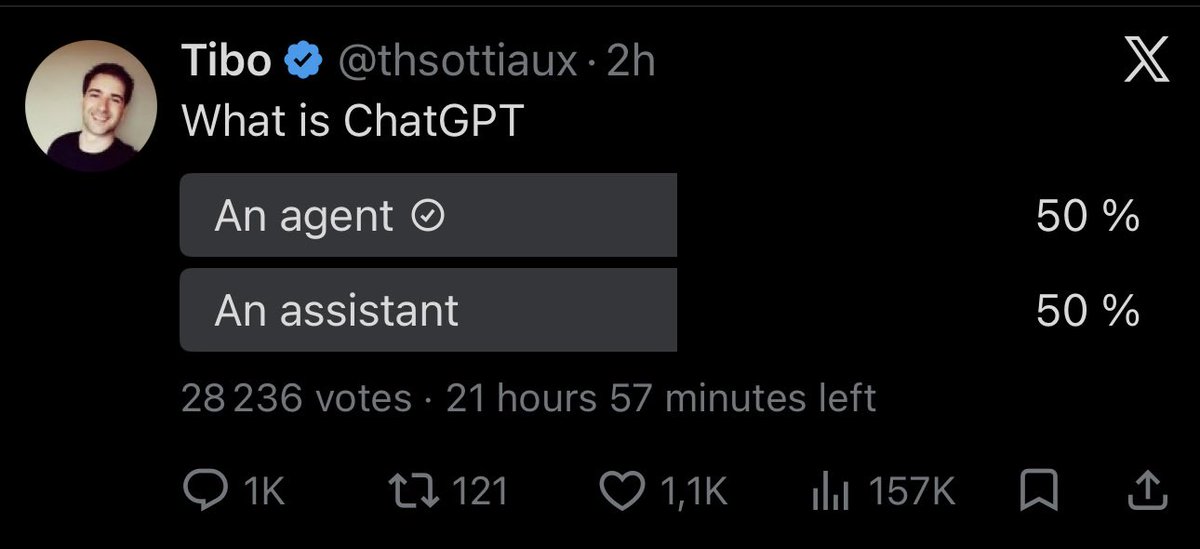 Company & TeamJokes about a colleague making decisions based on questionable internal numbers.


